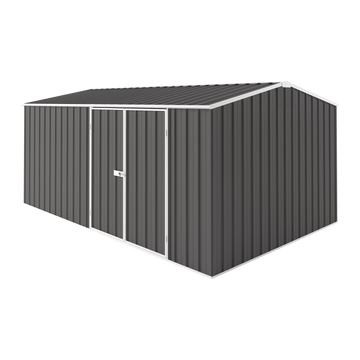
A 6m x 3m Workshop Shed, a concrete slab, and a licensed electrician are the three things you need to get a functional home workshop going. Everything else, like the bench, pegboards, whirlybirds, comes after.
Most Australians already have a shed. The gap between "shed full of stuff" and "functional workshop" is mostly sequencing. Get power, set up your base, and sort out ventilation before you start fitting things out, and the rest falls into place.
Here's a quick guide from Easyshed — Australia's #1 shed manufacturer — to setting up your home workshop.
- A 6m x 3m Easyshed Workshop Shed gives most DIYers enough floor space for a workbench, tool storage, and clear movement around equipment.
- Power, ventilation, and lighting need to be planned before you start fitting out — retrofitting them is expensive.
- Budget $500–$1,500 for basic fitout (bench, shelving, lighting) on top of the shed itself.
How Do You Choose the Right Size For Your Workshop?
A workbench runs about 600mm deep. Add 900mm of working clearance in front of it, and you've used 1.5m of your shed's width before you've put anything else in. A table saw or bandsaw needs clear space on both sides for the timber to pass through — typically 1m either way.
The practical minimum for a functional workshop is 3m x 3m, but you'll feel the squeeze fast. A 6m x 3m Easyshed Workshop Shed is a top pick where DIYers wouldn't have to compromise space. It fits a full-length workbench along one wall, a tool storage zone on another, and leaves enough floor space to work around larger projects.
If you're running power tools and want a dedicated space for a lathe, drill press, or dust extraction unit, go bigger. A 6m x 6m or 9m x 3m shed from our Big Sheds range gives you room to position machinery properly instead of working around it.
How Do You Get Started on the Shed Base?
A permanent workshop shed needs a stable, level base that won't shift with the seasons. In most Australian soil conditions, that means a concrete slab.
Slabs for garden sheds typically follow AS 2870-2011 (Residential slabs and footings). A standard 100mm slab with mesh reinforcement is adequate for most domestic sheds on stable ground. On reactive clay soils — common across Melbourne, Brisbane, and regional areas — you may need a thicker slab or engineer's advice.
Timber sub-floors work and are cheaper to install, but they're less forgiving under heavy machinery and more vulnerable to moisture over time. Compacted road base with pavers is fine for storage, not ideal for a workshop with rotating machinery.
A concrete slab for a 6m x 3m shed typically costs $1,500–$3,000 installed depending on soil conditions and your state. That's before the shed itself.
How Do You Get Power to Your Workshop?
Running power to a workshop shed is not a DIY job in Australia. Under AS/NZS 3000 (Wiring Rules), all electrical work must be completed by a licensed electrician.
The cost to trench and run a sub-board from your house to a shed ranges from $800–$2,500 depending on the distance and your local rates. Plan your power requirements before the electrician arrives.
A basic workshop circuit needs:
- At least one 20-amp circuit for power tools
- Separate circuits for high-draw tools (table saw, compressor) if you'll run them simultaneously
- Waterproof GPOs on the exterior if you want outdoor access
- A safety switch (RCD) on all circuits — required under Australian electrical standards
How Do You Manage Ventilation and Temperature Control?
Steel sheds heat up fast. On a 35°C day in Western Sydney or Adelaide, the inside of an unventilated steel shed can reach 55°C or higher within a few hours. That's uncomfortable, and it's also bad for timber, finishes, and anything with electronics.
The fix is ventilation, not air conditioning. Cross-ventilation — an Easyshed louvre window kit or vent on one wall, an outlet high on the opposite wall — keeps air moving and drops the working temperature significantly. BOM data shows that most Australian capital cities average 15–25 days per year above 35°C, with inland areas considerably higher.
For winter work (relevant in Victoria, Tasmania, and high-altitude areas), an electric panel heater is the safe option. Don't run unflued gas heaters in an enclosed shed as carbon monoxide builds quickly in a sealed steel structure.
If your shed has a roof pitch, a whirlybird costs around $150–$300 installed and makes a genuine difference to airflow.
How Do You Fit Out the Workshop?
This is where most people start, but it works better as the last step once power, base, and ventilation are sorted.
- Workbench: A solid hardwood or MDF-topped bench at 900mm height suits most adults. Build it from 90x45mm structural pine for rigidity — a wobbly bench is one of the more frustrating things in a workshop. Depth of 600mm is standard; go 750mm if you work with sheet material regularly.
- Storage: Wall-mounted metal shelving (standard 900mm x 400mm bays) handles most tool and hardware storage needs. A combination of a pegboard above the bench for hand tools and a lockable metal cabinet for power tools is a practical setup that most DIYers land on eventually.
- Lighting: Fluorescent tubes are cheap but cast shadows. LED batten lights at 4,000–5,000K (cool white) give better colour rendering and visibility for detailed work. Plan for 300–500 lux at bench height — that's roughly one 40W LED batten per 2m of bench length.
- Your Basic Fitout Cost — bench, shelving, and lighting runs $500–$1,500 depending on whether you build, buy, or DIY.
Do You Need Council Approval?
Most Australian states have an exempt development threshold for garden sheds. In NSW, sheds up to 20m² in area and 3m wall height are generally exempt under the Housing Code, provided setback rules are met. Victoria, Queensland, and WA have similar provisions but with different size limits.
Anything larger, or anything with a concrete floor that connects to the sewer, will likely need a DA. Check with your local council before you build — it's a 10-minute phone call that can save a costly knockdown order.
Frequently Asked Questions
What size shed do I need for a home workshop?
A 6m x 3m shed is the practical starting point for most DIYers — it fits a full workbench, wall storage, and space to move around larger projects. If you plan to run multiple stationary tools like a table saw and lathe simultaneously, a 6m x 6m footprint gives you more working clearance.
Can I run power to a shed myself in Australia?
No. Under Australian electrical standards (AS/NZS 3000), all electrical work must be carried out by a licensed electrician. Running power to a workshop shed typically costs $800–$2,500 depending on distance and your state.
What base is best for a workshop shed?
A concrete slab following AS 2870-2011 is the most durable base for a permanent workshop. It handles the weight of machinery, won't shift seasonally, and is easier to clean than timber or gravel. On reactive clay soils, get a soil report before pouring.
How do I stop my shed workshop from getting too hot in summer?
Cross-ventilation is more effective than trying to cool the space after it's already heated. A louvre vent on one wall and a high outlet on the opposite wall keeps air moving. A roof whirlybird adds further relief for around $150–$300 installed. BOM data shows most Australian cities see 15–25 days per year over 35°C, so this is worth planning for upfront.
Ready to choose the right kit for your workshop shed? Browse Easyshed workshop-ready sizes or use our shed size calculator to find the right fit for your build.


6m x 3m Workshop Shed
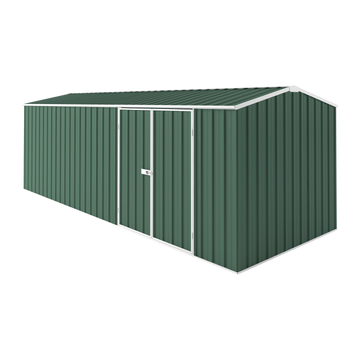
6m x 2.25m Workshop Shed
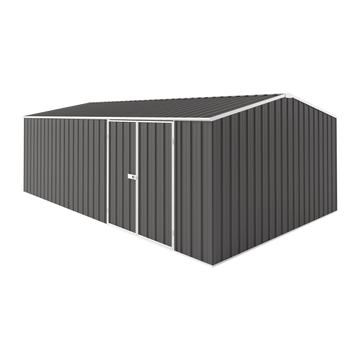
6m x 3.75m Workshop Shed