A shed makes a good home office when it's insulated, roomy enough to move around and store what you need, wired for power and internet, and properly wind-rated for your region. That combination is why more Australians are converting backyard sheds into offices instead of building a full extension. It's quicker, more affordable, and just as effective.
Do I Need to Insulate a Shed for a Home Office?
A shed with no insulation is fine for storing a lawnmower, but it's a different story when you're sitting in it for eight hours a day. Reflective foil insulation helps bounce summer heat away from a metal roof and walls, while bulk insulation such as glasswool batts adds proper thermal and sound performance underneath.
💡 Pro Tip: Budget for insulation from day one, not as an afterthought.
Most builders working on shed offices recommend combining the two rather than picking one, since foil handles radiant heat and batts handle everything else. Without insulation, a steel shed will run hotter in summer and colder in winter than most people expect, so we strongly recommend looking at available insulation options if the shed is going to be a workspace.
How Big Should a Home Office Shed Be?
Most shed offices work well starting around 3m x 3m. This gives you breathing room for your workstation, space to wheel around in on your ergonomic chair, storage for work items and knick-knacks, and space enough to get you good angles on those video call meetings.
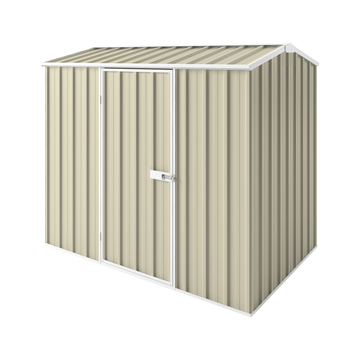
Easyshed's got the perfect fit. Our best-selling 3m x 3m Gable Roof Shed is just the right size to fit everything you need to get through the work day.
If you're building a workspace for two, choose the Easyshed Workshop Shed. A 6m x 3m Workshop Shed will be the perfect size to house a second set-up without feeling cramped and stuffy. And if you still need more room, we got you! You can go one size further and pick the 7.5m x 3.75m Workshop Shed.
Be sure to measure your desk, chair, and any equipment before you lock in a size. Going slightly bigger than you think you need costs less at the build stage than trying to extend later.


Do I Need Power in a Shed Office?
Plan the electrical side properly before the shed goes up, not after. That means more power points than feels necessary, since a home office setup usually ends up with a monitor, laptop charger, heater or fan, and various chargers all running at once. It's also worth asking your electrician about a dedicated circuit for heating or cooling, so it's not sharing a circuit with everything else.
Electrical work needs to be done by a licensed electrician, so book them in at the same time as the shed build rather than treating it as a follow-up job.
What Wind Rating Do I Need for a Home Office Shed?
Whatever's sitting at the end of the garden needs to actually survive being there. Look for a shed with a wind rating suited to your location: N1-N2 is the standard benchmark for most suburban and regional Australian backyards, while cyclone-prone regions need a higher C-rating.
Easyshed garden sheds are classified N1-N2. Smaller sheds are classified N1, while medium-large sheds like our Gable Roof Sheds and Workshop Sheds are classified N2 and come with Portal Frame Kits to help support the roof and wall cladding.
Another thing to note would be that a garden shed's wind rating only holds up if it is anchored correctly. A wind-rated shed that isn't properly fixed to a slab or footings won't perform to that rating in practice, so don't skip this step to save time.
Can a Shed Office Be Used for Anything Else?
One advantage of setting up a shed as a home office is that the same structure can flex into other roles later if your needs change. The same footprint that works as an office today can just as easily become a workshop, a music room, or extra storage down the track, which makes it a lower-risk purchase than a purpose-built cabin with a single use.
Frequently Asked Questions
Do I need council approval to use a shed as a home office in Australia?
Requirements vary by state and council, and depend on the shed's size, whether it includes plumbing or sleeping facilities, and your specific block. Habitable structures and anything involving electrical or plumbing work generally need approval, so it's worth checking with your local council before starting, even for a straightforward office fit-out.
What size shed do I need for a home office?
Most single-person home offices work comfortably from around 3m x 3m upward. If you need a second workstation or space for more items, plan closer to an Easyshed 4.5m x 3m Workshop Shed or an Easyshed 6m x 3m Workshop Shed.
How do I keep my shed office cool in the summer?
Maximise airflow by adding a Louvre Window to your Easyshed Workshop Shed. It’s a simple and affordable add-on you can’t go wrong with. Adding insulation is also a good alternative, and having both will definitely boost the comfort level in your shed during those hot summer months.
Set Up a Backyard Office That Works with You
A shed home office only pays off if the shed itself is up to the job: insulated properly, sized for how you'll actually use it, wired for the work you do, and strong enough to handle Aussie weather all year-round. Get those basics right and the rest of the setup - desk, chair, shelving - is the easy part.


3m x 3m Gable Roof Shed
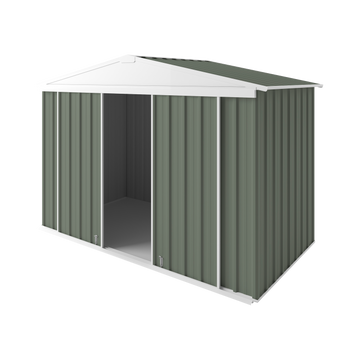

3m x 1.5m Gable Slider Shed
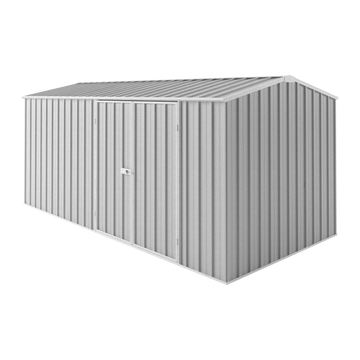

4.5m x 2.25m Workshop Shed

6m x 3m Workshop Shed
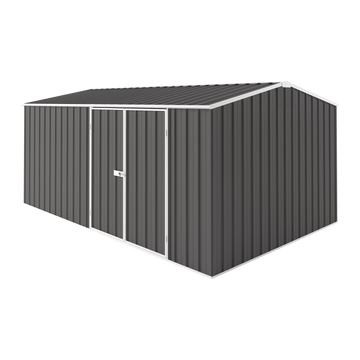
4.5m x 3m Workshop Shed