Trying to decide between a shed and a garage for extra space at home? Here's the short version: a garden shed wins on cost and approval speed for almost everything except secure house-attached vehicle parking. The right choice has less to do with which structure sounds more substantial and more to do with what you're actually going to put in it.
How is a Shed Similar to a Garage?
A garage and a shed sound like different building categories. Under the Building Code of Australia, they mostly aren't. Garages, carports, and sheds are all grouped under Class 10a: non-habitable structures not meant for permanent living. That classification holds for a steel garden shed at the back of a suburban block and a double brick garage bolted to the side of a house, right up until someone adds a toilet or starts sleeping in it.
What actually separates them in practice is attachment and intent. A garage is usually attached or close to the house, built primarily to store a vehicle securely, and designed to look like part of the dwelling. A shed is detached, built for storage, tools or hobby space, and judged on function rather than street appeal. Once you strip away the labels, the decision comes down to three things: cost, approval time, and what you're going to do with the space day to day.
What is the Cost Gap Between a Shed and Garage?
Your standard size garden shed kit typically costs anywhere between $500 to $1,500 unpowered, climbing to $1,500 to $2,500 insulated and powered.
A home garage is a different financial proposition altogether. Brick and attached builds commonly run from $15,000 for a simple single bay up past $100,000 for a double garage with lined walls, power, and a finished floor, before design fees and council costs.
Part of that gap is the foundation. A garage usually needs a full concrete slab, often $100 to $150 per square metre on its own, plus brickwork, roofing, and a proper door system. A shed kit on a simple slab or pier footing skips most of that. If budget is the deciding factor, this is rarely a close call: a shed is the cheaper structure by a wide margin, even before labour.
If you need 20 square metres of covered space and don't care whether it's brick, a shed gets you there for a fraction of the price. If you need it to look and function like part of the house, you're paying for that.
Do You Need a Permit for Your Shed or Garage?
Most states allow sheds under roughly 10 square metres floor area, with a height limit around 2.4 to 3 metres, to be built without a development application or building permit, provided they sit clear of boundaries and aren't in a flood, bushfire, or heritage overlay. Thresholds vary by state and council, so check before ordering, but the general pattern holds across most of the country.
Garages don't get the same leeway. Because they're usually attached to the house, larger, and often involve plumbing or wiring, most councils require a building permit regardless of size, meaning engineering drawings, a site plan, and a wait that can run from weeks to months depending on the council's backlog.
A shed that fits the exemption thresholds can go from delivery truck to finished structure inside a weekend. A garage build, even a modest one, is a multi-month project once the approval queue is factored in.
What Is Each One Actually Good At?
This is where it gets practical. A shed earns its keep as workshop space, garden tool storage, a spot for the mower and the camping gear, or a hobby room you can fit out exactly how you like without a builder hovering over the budget.
This is squarely where Easyshed's steel garden sheds fit: set up with shelving and a workbench, a 3m x 3m or 3.75m x 2.25m shed handles most weekend-warrior projects without fuss.
A garage does the one thing objectively better than a shed: it keeps a car more secure and connects seamlessly to the house. If you want covered access from the car to the front door on a wet morning, that's a garage job. It also tends to read better on a property valuation, since it's seen as part of the dwelling rather than a freestanding extra.
Do You Need a Built-In Home Garage?
Here's the part people often miss: you don't necessarily need a built-in home garage to park under cover. A large enough shed — or a purpose-built garage shed — will happily house a car, trailer, or ride-on mower. The real question isn't "shed or garage," it's how much secure, weatherproof space you need and whether it has to attach to the house. If it doesn't, a steel garage shed gets you there for a fraction of a brick build, and usually with less council fuss.
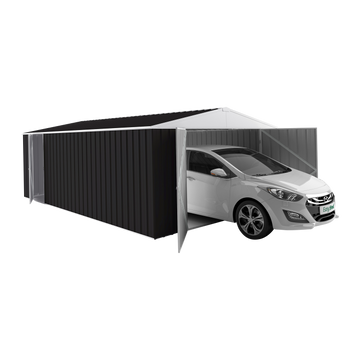

3.75m x 4.5m Garage Shed
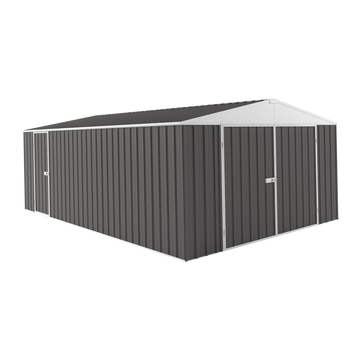
3m x 4.5m Garage Shed
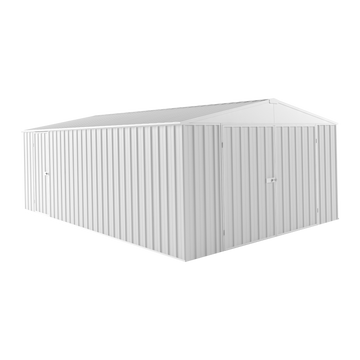
3m x 6m Garage Shed
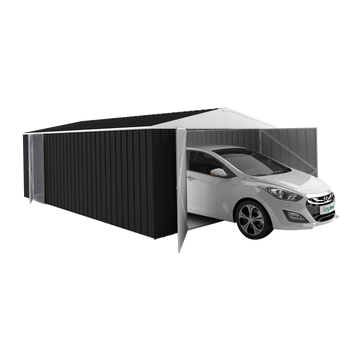
3.75m x 7.5m Garage Shed
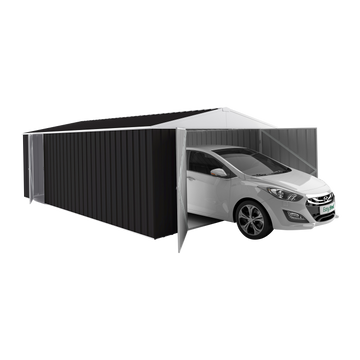
3m x 7.5m Garage Shed
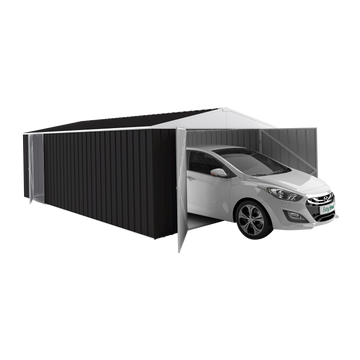

3.75m x 6m Garage Shed
Decision Time: How Do I Decide Between a Shed and a Garage?
Need affordable, fast, flexible space for tools, hobbies, or storage? Go shed.
Need to park a car securely, attached to the house? Go garage.
Tight budget and no urgent need for vehicle security? Shed, almost every time.
Planning to add plumbing or convert the space to a habitable room later? Talk to a certifier before you build either one, since that changes the classification and the approval pathway.
Frequently Asked Questions
Can I convert a garden shed into a garage later?
Sometimes, if the shed has the floor strength, door width, and access for a vehicle, and the site allows for a driveway. It's worth planning for this upfront if there's a chance you'll want it, since retrofitting a slab or widening an access path after the fact adds real cost.
Does a shed add the same value to a property as a garage?
Not usually. Garages tend to be counted as part of a property's living and storage footprint by valuers and buyers, while sheds are seen as a useful extra rather than a core feature. A garage typically has a bigger impact on resale value.
Do I need an engineer for either one?
For an exempt-development shed under the size and height thresholds, usually not, though it depends on your state and site conditions. For a garage, or for any shed over the exemption limits, yes. Most councils require signed engineering to confirm wind rating and structural compliance before issuing a permit.
Which one is faster to actually get built?
A compliant shed, almost always. If it fits the exemption thresholds, you can go from order to finished structure in a matter of days once it's delivered. A garage, with its permit process and slab work, is typically a project measured in months rather than days.
Sheds Win on Value, Garages Win on Vehicle Security
Neither structure is objectively better. A shed is the faster, cheaper answer for almost every storage, hobby, or workshop need, and it clears council approval in most states without a fight. A garage earns its higher price tag when a vehicle needs to be secure and weatherproof right next to the house. Match the structure to what you're actually going to do with it, and the decision mostly makes itself.
Want the best of both worlds? Easyshed Garage Sheds are easy to assemble flatpack kits that are made strong and tough to brave the Australian weather. Check out the collection today!
Eager to read more? The Easyshed guide on How to Set Up a Home Workshop in a Garden Shed will walk you through layout and power considerations. And if you're looking to build alongside a fence, we've got a Slimline Garden Shed guide that goes over How to Fit a Garden Shed Along a Fence Line in Australia that covers setback, clearance rules, and shed recommendations to make your life easy.