Whatever you envision for your space, one thing you’re probably wondering is how big you can go without needing a permit. And, if you don’t meet those requirements, you might be wondering how you would go about getting a permit. In this blog, we’re going to talk about all things permits. When you need one. When you don’t. How you might keep your shed within the limits. Or, how to get a permit if you can’t. All your permit questions answered in one place!
The General Consensus
According to the most recent laws, the majority of councils allow for up to 10 square metres before you need to apply for a permit. That means, you could purchase any of our sheds that are 3m x 3m, 3.75m x 2.25m, or less and be all set to go without a permit. Some councils have requirements about the shed height, building material, and placement in the yard. Some states also offer fast track permits for smaller structures like sheds, which is great news for future shed owners.
Requirements by state
New South Wales
For NSW, here are the ways that your shed can be exempt from needing council approval:
- Your shed is the only detached structure in the backyard
- Your shed is not a shipping container
- Your shed is no larger than 20 square metres if you live in a residential area
- If you live in a rural area (RU1, RU2, RU3, RU4 or RU5), your shed is no larger than 50 square metres
- Your shed is at least 900mm away from each boundary
- If your shed is raised off the ground - lofted, for instance, - it is less than 3 metres from the ground
- Your shed doesn’t interfere with the fire safety of other buildings - it’s not blocking entrances, for instance
- Your shed isn’t made of fire-prone materials if you live in a fire-prone area
- Your shed is constructed of low-reflective material in residential areas
- The water runoff from your shed doesn’t have a negative impact on your neighbor’s property
If even one of these stipulations doesn’t describe your shed, you’ll have to reach out to your city council for clarification and start the approval process.
Check out the NSW Government ‘Rules for Exempt Development’ page here.


Queensland
There are relatively few exceptions in Queensland if you’re looking to purchase a shed. If your shed meets the following requirements, you do not need to apply for a permit:
- Your shed is less than 10 square metres
- Your shed doesn’t have any single wall longer than 5 metres
- Your shed is no taller than 2.4 metres high
- Your shed doesn’t have an average mean height of more than 2.1 metres
Check out the Brisbane City Council page here.
South Australia
You won’t need to apply for council approval if your shed:
- Will be used as an extension of the house instead of a separate home office or other use
- Is smaller than 15 square metres
- Has a width, or span, of less than 3m (that means that the largest EasyShed you can buy would be 3m x 3m without a permit)
- It’s not raised higher than 2.5m off of ground level
- Is not located on heritage land (either local or state)
- Is located on the property so that it is not closer to the street than the main building
- It is more than 900mm away from a boundary with a second street (on a corner property, for instance)
- It is more than 6m away from a corner boundary
As you can see, these requirements are not quite as straightforward as some of the other states, so it’s a good idea to go to the council directly, just to make sure.
View the South Australia Planning & Design Code here.
Tasmania
Here are the guidelines for a shed that doesn’t need council approval:
- The shed is built in the backyard
- The land is not Heritage listed
- The shed is less than 9 square metres, with no one wall longer than 3 metres
- The pitch of the roof is less than 25 degrees
- If the shed is raised off of the ground, the highest part cannot be higher than 2.4 metres off the ground
See the rest of the Tasmania Fact Sheet for Sheds & Similar Structures here.
Want another resource? Check out the State Planning website for Tassie here.
Victoria
If your shed in Victoria meets these guidelines, you don’t need a permit!
- Your shed is no larger than 10 square metres
- Your shed is less than 3 metres in height
- If your shed is within 1 metre of a boundary, the height cannot exceed 2.4 metres
- The shed doesn’t extend beyond the front wall of the main building
- Constructed of a material other than masonry
View the Victoria Planning and Building Permits website here.
Western Australia
Here are the guidelines for a shed that doesn’t need a permit:
- It’s no taller than 2.4 metres
- It does not extend beyond the front setback line
- The shed complies with fire safety requirements of the main building
- It is not raised above 500mm from the ground
- The shed is not within 900mm of any other structure
- The shed is securely anchored as a defense against strong winds
- The shed is structurally strong
- There is no visual interference with sight lines for vehicles
- The shed is not in a conservation precinct
Western Australia council also strongly recommends that you talk to your neighbours about potentially installing a garden shed in the backyard.
Done with the neighbourly chat? Check out the WA Building Approvals link here.
ACT
The ACT has similar requirements as the previous examples, but there are a couple of extra considerations about block size to that you’ll need to be aware of. Let’s cover those first:
- If your block size is 600 square metres or larger, your shed can have a maximum square metreage of 50 square metres
- If your block size is between 500 and 600 square metres, your shed must be 25 square metres or smaller
- If your block size is less than 500 square metres, your shed must be 10 square metres or smaller
In addition to these requirements,in order to avoid the need of a permit, the shed must:
- Be behind the building line (and, if it is larger than 10 square metres, it also needs to be 15 metres back from the front boundary)
- Not be raised more than 3 metres above the ground level
There are also special considerations if you’ll be building two exempt structures (like a garden shed) within 1.5 metres of a side boundary or back boundary, so make sure to check with the council if you’re part of this special category.
View the ACT Assessment and Approvals and how to contact your council here.
Northern Territory
Our last stop is Northern Territory. Here’s what you need to build permit-free:
Option One (Residential Area): For a shed in which the roof area doesn’t exceed 12 square metres, you’ll need the height to be less than 2.1 metres. This shed has to be at least 40 metres away from all boundaries.
Option Two (Rural Area): For a shed with a roof area of between 12 and 30 square metres, the height should be under 2.4 metres and the shed must be over 70 metres away from all boundaries.
Need more info? View the Northern Territory Building & Renovating: Permits and Processes official site here.


3m x 3m Gable Roof Shed
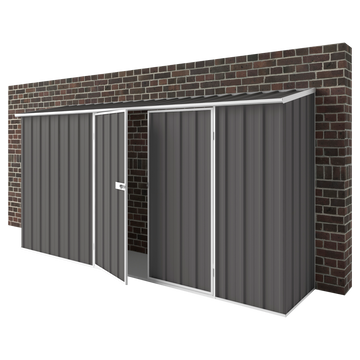
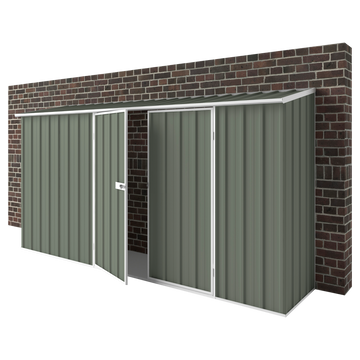
3.75m x 0.78m Off The Wall Shed
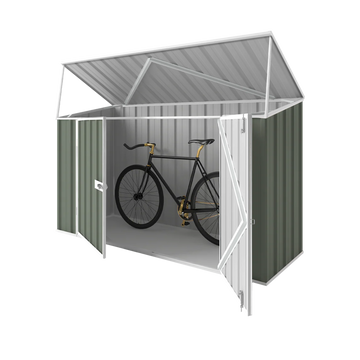

2.25m x 0.78m Bike Shed
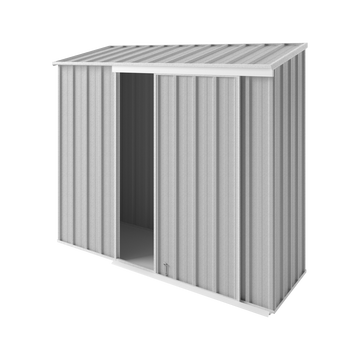

2.25m x 0.78m Narrow Slider Shed
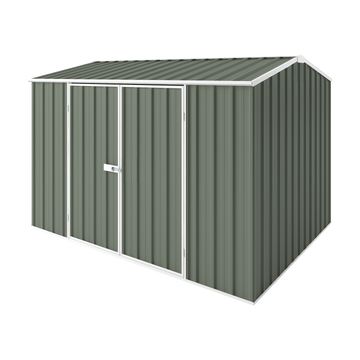

3m x 2.25m Gable Roof Shed
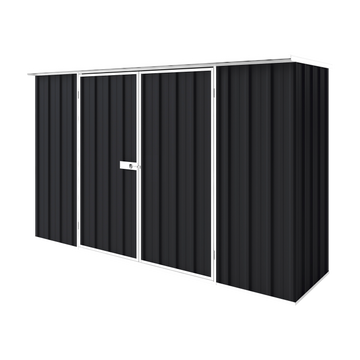
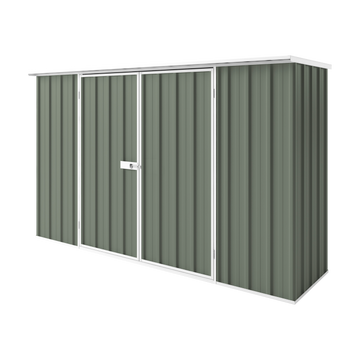
3m x 0.78m Flat Roof Shed
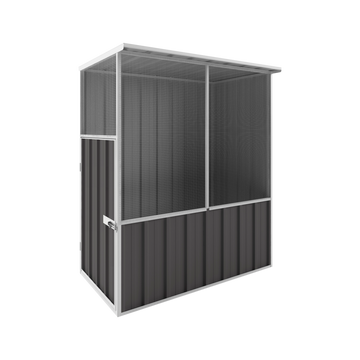

1.5m x 0.78m Aviary Pet House
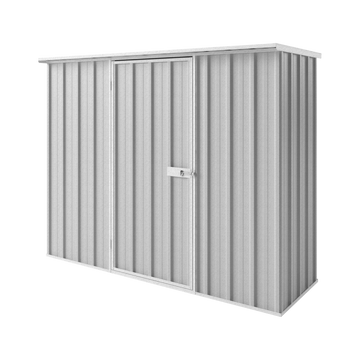

2.25m x 0.78m Flat Roof Shed


1.5m x 0.97m Pool Pump Shed
Going About Getting a Permit
The idea of going to council to get approval may seem intimidating or a hassle, but it’s not as complicated as you think. Every region will be slightly different, so it’s important that you ask for more information from your council, but in general, the council has pretty straightforward requests.
Here are a couple of the things that they might ask you for:
- Shed design. Easyshed kits consist of simple designs that shouldn’t raise too many questions when it comes to approval.
- Statement of what the shed will be used for. The council will want to know if your shed will be used for personal storage or as a home office with full plumbing and electricity. Whatever you’re going to be using the shed for, be honest.
- Backyard layout plans. The council will want to make sure that the shed isn’t going to be in the way of safety exits, so you’ll likely have to provide a layout of your backyard with the proposed location of the shed.
- An application. Some regions offer a fast-tracked shed approval application to make sure that your request doesn’t get lost with the other big building projects.
Again, it’s very important that you check in with your local council before you start gathering these documents. Not all of these will be required in every state, and some states may require extra documentation. So, ask first.
Extra Considerations
In addition to possibly needing a building permit from council for your shed, things might get a little bit more complicated if you’re planning on installing electricity or plumbing. Even installing a solar panel on the roof of your shed may bring up an issue if you haven’t gotten the proper approval.
So, when in doubt, make sure that you check in with council. If you didn’t have to get approval when you first bought the shed, any alterations, such as adding plumbing and electricity, may change things.
Time to start searching for your new shed!
Now that you have a good idea of what will be required from you when it comes to installing a shed in your backyard, you can move to the exciting part. Easyshed offers a variety of shed sizes, roof styles, and colours that you’ll easily be able to find a shed that meets both your needs and local requirements.
And if you still have some questions about permits, feel free to reach out. We’re happy to help you navigate the process as best we can.
As always, we love sharing our information with all current and potential shed owners, so send this to anyone who could use a heads-up about building a shed without a permit!